Understanding Uniform Distribution
The Uniform Distribution is a type of probability distribution where every event has an equal chance of occurring. This distribution is often used in the generation of random numbers.
Key Parameters of Uniform Distribution
- low: The lower bound of the distribution (default: 0.0)
- high: The upper bound of the distribution (default: 1.0)
- size: The shape of the returned array (e.g., 2×3 matrix)
Example: Create a 2×3 Uniform Distribution Sample
from numpy import random

x = random.uniform(size=(2, 3))

print(x)
Visualize Uniform Distribution
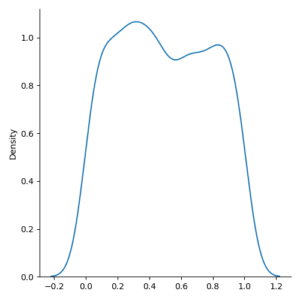
You can visualize the uniform distribution with a histogram. The distribution will appear as a flat line, demonstrating the equal probability of all events within the given range.
from numpy import random
import matplotlib.pyplot as plt
import seaborn as sns

sns.distplot(random.uniform(size=1000), hist=False)

plt.show()
Conclusion
In summary, the Uniform Distribution is useful when you want every possible outcome to have the same probability. By adjusting the parameters like low, high, and size, you can generate a wide range of random values for simulations or experiments.